Selling or buying a car, truck, or motorcycle privately? Using a vehicle bill of sale template is a critical step in finalizing the deal. It protects both the seller and the buyer by creating a legal record of the ownership transfer, payment terms, and the vehicle's condition at the time of sale.
Create your vehicle bill of sale quickly: our guided template helps you collect every detail needed by your local DMV, allowing you to preview, print, or download your document as a professional PDF or Word file in minutes.
What Is a Vehicle Bill of Sale?
A vehicle bill of sale is a legal document that formally transfers ownership of a motor vehicle, such as a car, truck, motorcycle, or RV, from a seller to a buyer. It acts as a formal sales receipt, establishing the purchase price and confirming that the transaction was conducted legally.
Beyond serving as a contract between two individuals, this document is essential for administrative requirements. Most state departments of motor vehicles (DMV) or equivalent licensing agencies require a bill of sale to process title transfers, issue new registration, and calculate applicable sales taxes. Without it, you may face significant hurdles when attempting to register your new vehicle.
A properly drafted vehicle bill of sale secures your interest by providing ironclad evidence of the transaction, establishing the exact date of transfer, and satisfying critical state DMV documentation requirements.
When Is a Vehicle Bill of Sale Required?
You should prepare and sign a vehicle bill of sale in every private vehicle transaction. It is not just "paperwork" - it provides necessary legal safeguards:
- DMV Registration and Titling: To legally operate the vehicle, you must transfer the title. A bill of sale is almost always required alongside the signed title to verify the purchase price and the legitimacy of the transfer.
- Sales Tax Calculation: Your state taxing authority uses the purchase price listed on the bill of sale to determine the sales tax amount due upon registration.
- Liability Protection for Sellers: Once the vehicle is sold, signing a bill of sale officially documents the moment the buyer took possession. This helps protect the seller from being held liable for traffic tickets, crimes, or towing fees that occur after the car has changed hands.
- Dispute Resolution: If a dispute arises over the payment amount, the condition of the vehicle, or whether the sale was "as-is," the bill of sale acts as the definitive contract that can be used to resolve the issue in court.
How to Sell a Car Privately (Step-by-Step)
Selling a car can be smooth if you follow a structured procedure to ensure all legal bases are covered.
Verify Information and Title
Before listing the vehicle, ensure you have a clean title in your name. Gather all necessary documentation, including the VIN, current registration, and maintenance records.
Prepare the Vehicle and Bill of Sale
Determine the vehicle's "as-is" condition or disclose any known mechanical issues. Use our vehicle bill of sale template to pre-fill the details, ensuring you have space for odometer disclosure and party signatures.
Meet the Buyer and Inspect the Vehicle
Allow the prospective buyer to inspect the vehicle and take it for a test drive. Be honest about its condition. If you reach an agreement, complete the bill of sale with the agreed-upon purchase price and payment terms.
Sign and Notarize
Both parties must sign the bill of sale. Check your state's DMV requirements; some states require the document to be notarized to validate the title transfer process.
Finalize Registration and Transfer
Hand over the signed title, the bill of sale, and the keys to the buyer. Immediately report the sale to your local DMV, if required, to release your liability for the vehicle.
Crucial Elements: VIN, Odometer, and Purchase Price
To be legally accepted by a DMV, your vehicle bill of sale must contain specific, unalterable data points:
- VIN (Vehicle Identification Number): This 17-character code is unique to your vehicle. It is arguably the most important element on the document, as it tracks the vehicle's history, recalls, and registration.
- Odometer Reading: Federal law requires an accurate odometer disclosure at the time of transfer. Falsifying this information is a serious federal offense under the Odometer Disclosure Act.
- Correct Purchase Price: This is the dollar amount used by the state to compute sales tax. It is vital to report a realistic, accurate price to avoid scrutiny from the state's department of revenue.
Does a Car Bill of Sale Need to Be Notarized?
Whether a car bill of sale requires a notary depends entirely on where you live. While not required in every state, notarization is mandatory in many:
- Specific States: States such as Louisiana, Nebraska, and Maryland often require notarized bills of sale for vehicle title transfers.
- Title Issues: If the vehicle title is missing or if the seller is not the person listed on the title, DMV offices often demand more rigorous proof of identity, for which notarization is standard.
- Fraud Prevention: Notarization provides a layer of security, as the notary public verifies the identity of both parties, making it significantly more difficult for someone to forge a signature on a high-value transfer.
Bill of Sale vs. Vehicle Title: Understanding the Difference
It is easy to confuse a bill of sale with a title, but they serve entirely different purposes:
| Feature | Bill of Sale | Certificate of Title |
|---|---|---|
| Primary Goal | Documenting the sale transaction | Proving legal state-recognized ownership |
| Created By | Buyer and seller | State DMV / Department of Transportation |
| Content | Purchase price, "as-is" terms, signatures | Owner name, lienholder, official state info |
| Usage | Evidence for tax collector | Mandatory for re-titling and registration |
While you sign the bill of sale to document the agreement and payment, you must also sign the physical Certificate of Title to pass the legal rights to the vehicle to the buyer.
State DMV Requirements & Registration Tips
Every state has slightly different rules, and navigating them can be complex. Here is how to ensure your registration goes smoothly:
- Check Your DMV Website First: Always verify if your state provides its own specific bill of sale form. While our template is widely accepted, some states (e.g., California, Florida, Texas) have mandatory official forms.
- Handle Sales Tax Correctly: Be prepared to pay sales tax based on the purchase price you report on your bill of sale. If you pay far below the market value, the DMV may insist on using an official state valuation guide rather than your reported price.
- Release of Liability: In many states, you are required to submit an online or paper "Release of Liability" (or "Notice of Transfer") once the keys change hands. Do not skip this; it is your primary protection if the new owner receives parking tickets or gets in an accident with the vehicle before registering it.
For guidance on other legal documents, check our bill of sale overview, our specific boat bill of sale template, or explore our business templates.
Frequently Asked Questions
Sample document preview
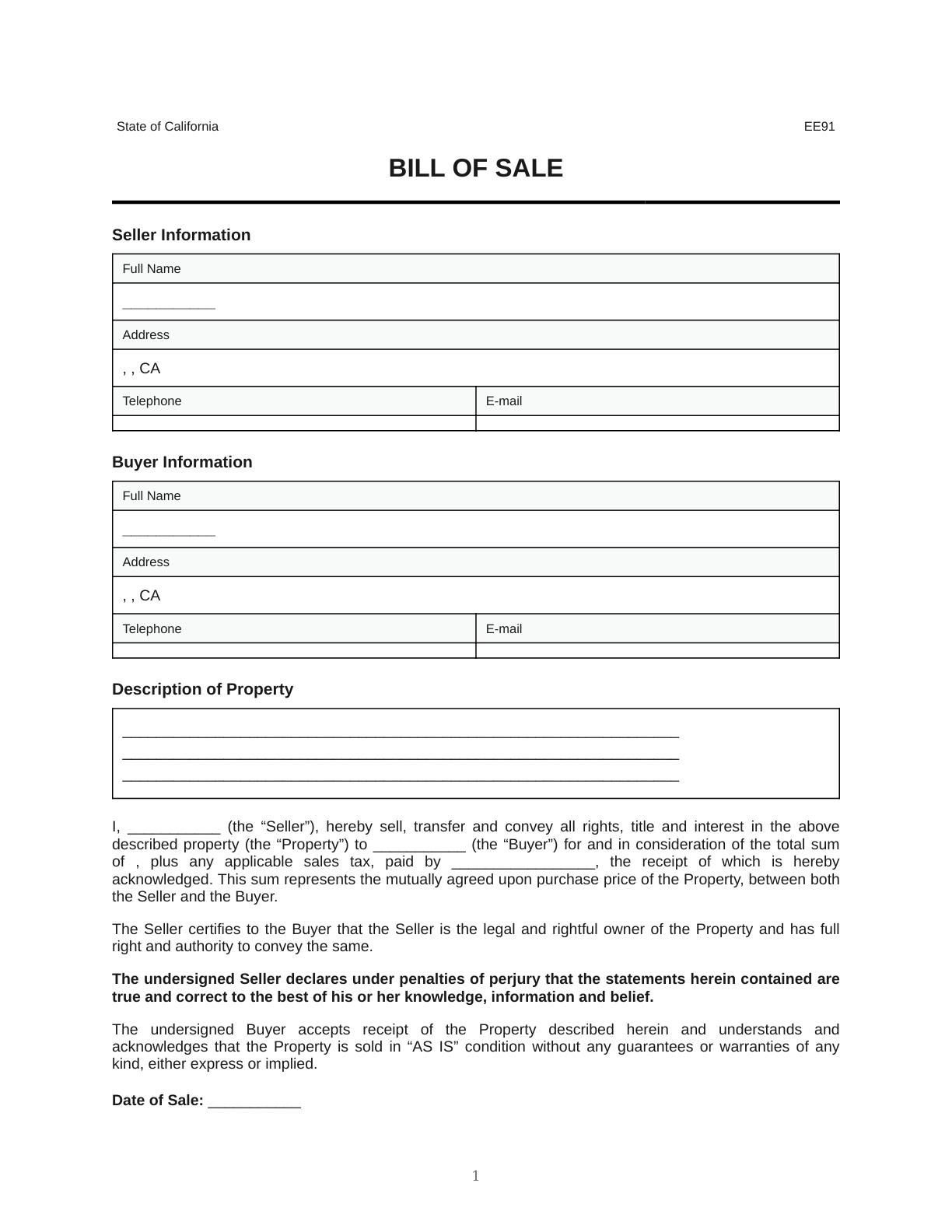
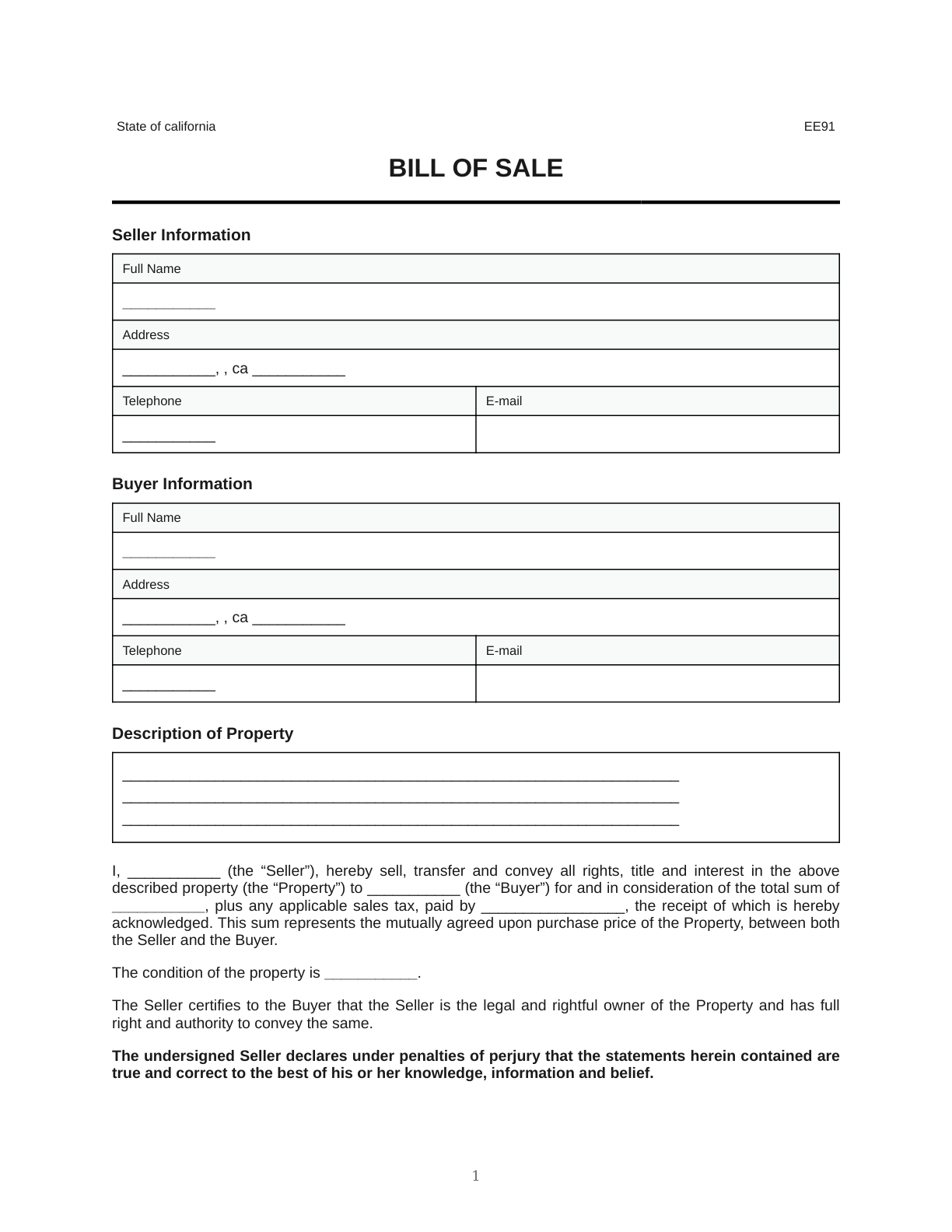
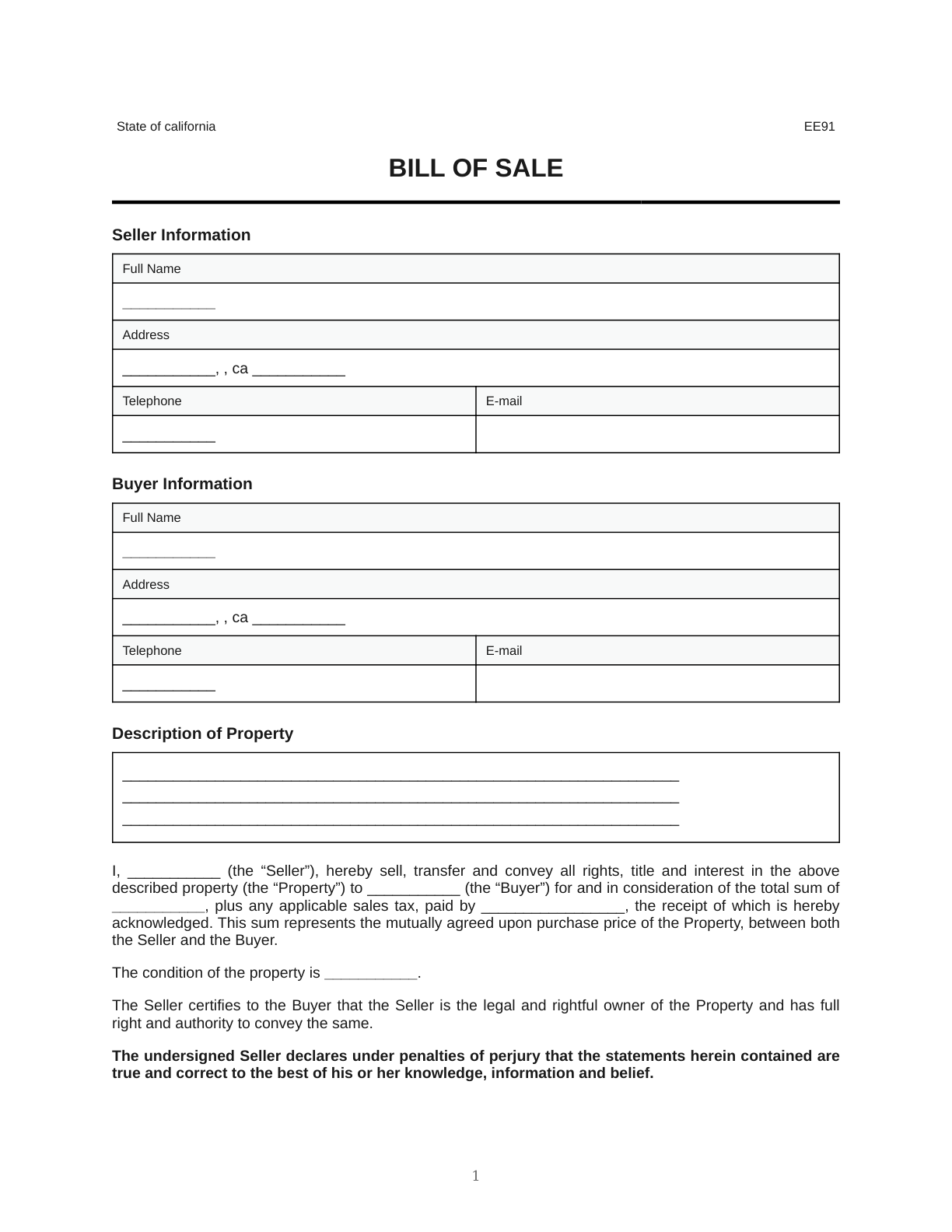
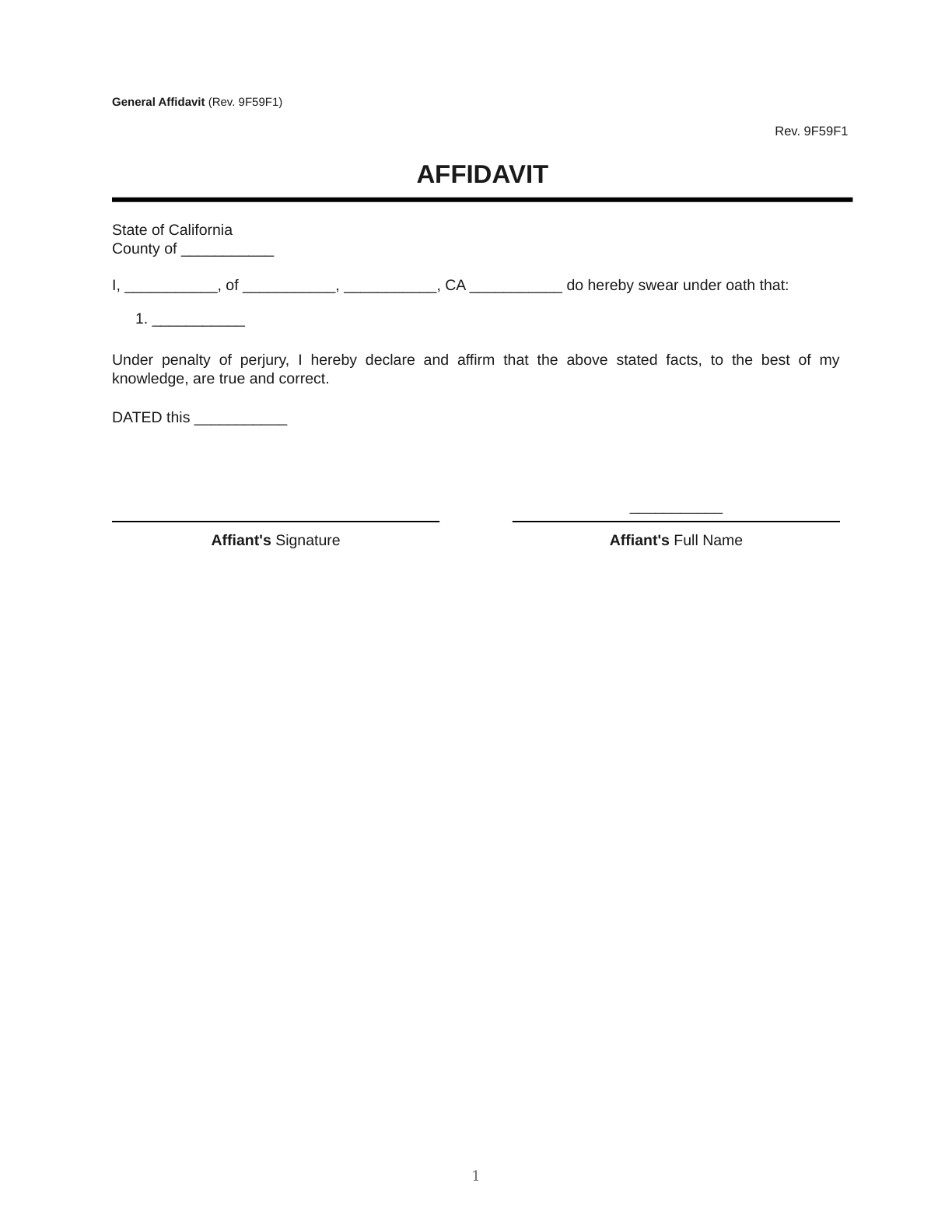
This page includes a sample Vehicle Bill of Sale (California) with blank answer lines. Names, dates, dollar amounts, and other details are intentionally left unfilled so you can see the document structure.
Downloadable sample PDF and Word files include only the first 2 pages, plus a final page with a link to create the full document on Doqu. They are not complete, usable legal documents.
To complete this document: use the Doqu editor to answer guided questions. Your live preview updates as you fill in each field, then you can download or send the document for e-signature.
Download the sample files below to review layout and clause structure before you start.