Someone will not stop, and you want it on the record. Create a cease and desist letter free to start: pick what you need stopped, answer a few questions, preview the letter, then download as PDF or Word.
You choose the situation (harassment, defamation, copyright, trademark, or a debt collector who will not leave you alone) and the letter changes to match it. It names the conduct, sets a deadline, and says what happens if they ignore you.
One thing to be clear about upfront: this letter is not a court order. It is a formal warning that creates a paper trail, and for most people that is enough to make the behavior stop.
What is a cease and desist letter?
A cease and desist letter is a written demand that someone stop a specific activity and not resume it. It identifies who is sending it, describes exactly what the other side is doing, demands that they stop by a stated date, and warns that legal action follows if they do not.
It carries weight for two reasons. First, it removes any argument that the other side did not know their conduct was unwelcome or unlawful. Second, it becomes evidence. If you later go to court or apply for a restraining order, a dated letter showing you asked them to stop, and showing they kept going, is one of the most useful documents you can hand a judge.
A cease and desist letter has no force on its own. Its value is that it puts the other side on notice in writing and starts a documented record of the conduct and your response.
When to send one
Sending a letter makes sense when the conduct is ongoing, you can describe it specifically, and you would rather resolve it without filing anything. Common moments people reach for one:
- A neighbor, ex-partner, or stranger keeps calling, showing up, or following you.
- Someone posted false claims about you or your business online and will not take them down.
- A competitor is using your brand name or logo and confusing your customers.
- Someone republished your photos, writing, music, or code without permission.
- A debt collector keeps calling after you asked them to stop, or about a debt you do not owe.
Hold off if you are in physical danger. In that situation, call the police and ask the court about a protective order first. A letter is a paper remedy and it does not stop someone who is willing to break the law.
What kind of letter do you need?
The five situations below use the same structure but different legal ground. Pick a type here, or open the dedicated page if you already know which one you need.
- Harassment. List each behavior you want stopped, describe the effect, and demand no further contact. Specific dates and counts carry far more weight than general complaints.
- Defamation. Quote the false statement, say where it was published, explain why it is false, and demand removal or a retraction. Opinions are generally not defamation. Provably false statements of fact are.
- Copyright infringement. Identify your original work, when you published it, and how their work copies it. Registration with the U.S. Copyright Office is not required for the letter, but it is required before a federal lawsuit.
- Trademark infringement. Identify your mark, when you started using it, and how their mark confuses customers. Registration with the USPTO helps but is not required to send a demand.
- Debt collection. Under the Fair Debt Collection Practices Act, a collector must generally stop contacting you once you tell them in writing to stop. The FTC's debt collection guidance explains the rules. Stopping the calls does not erase the debt.
How to write your cease and desist letter
Say exactly what you want stopped
Vague complaints are easy to ignore and easy to deny. Write dates, times, counts, and locations: "called my mobile phone 23 times between June 3 and June 10" beats "keeps harassing me." If you are dealing with a copied work or a copied brand, name both yours and theirs so there is no confusion about what you mean.
Explain the harm
Say what the conduct has cost you, whether that is lost customers, damage to your reputation, or stress and disruption at home. This matters if the dispute escalates, because harm is what turns a complaint into a claim.
Set a deadline you can live with
Ten to fourteen days is common and reads as reasonable if a judge sees the letter later. Demand immediate action when the conduct is ongoing or dangerous. Whatever you choose, be ready to follow through, because a deadline you ignore teaches the other side that the next one is empty too.
State the consequence, and keep it accurate
Say that you will pursue the legal remedies available to you if they do not comply. Do not threaten criminal charges to get a civil result, and do not claim rights you do not have. Overstating your position is the fastest way to lose credibility, and in some states an improper threat can backfire on you.
Attach your evidence and send it so it is traceable
Screenshots, call logs, photos, and copies of the infringing material go in as Exhibit A. Send by certified mail with return receipt so you have dated proof of delivery, and keep a copy of everything you sent.
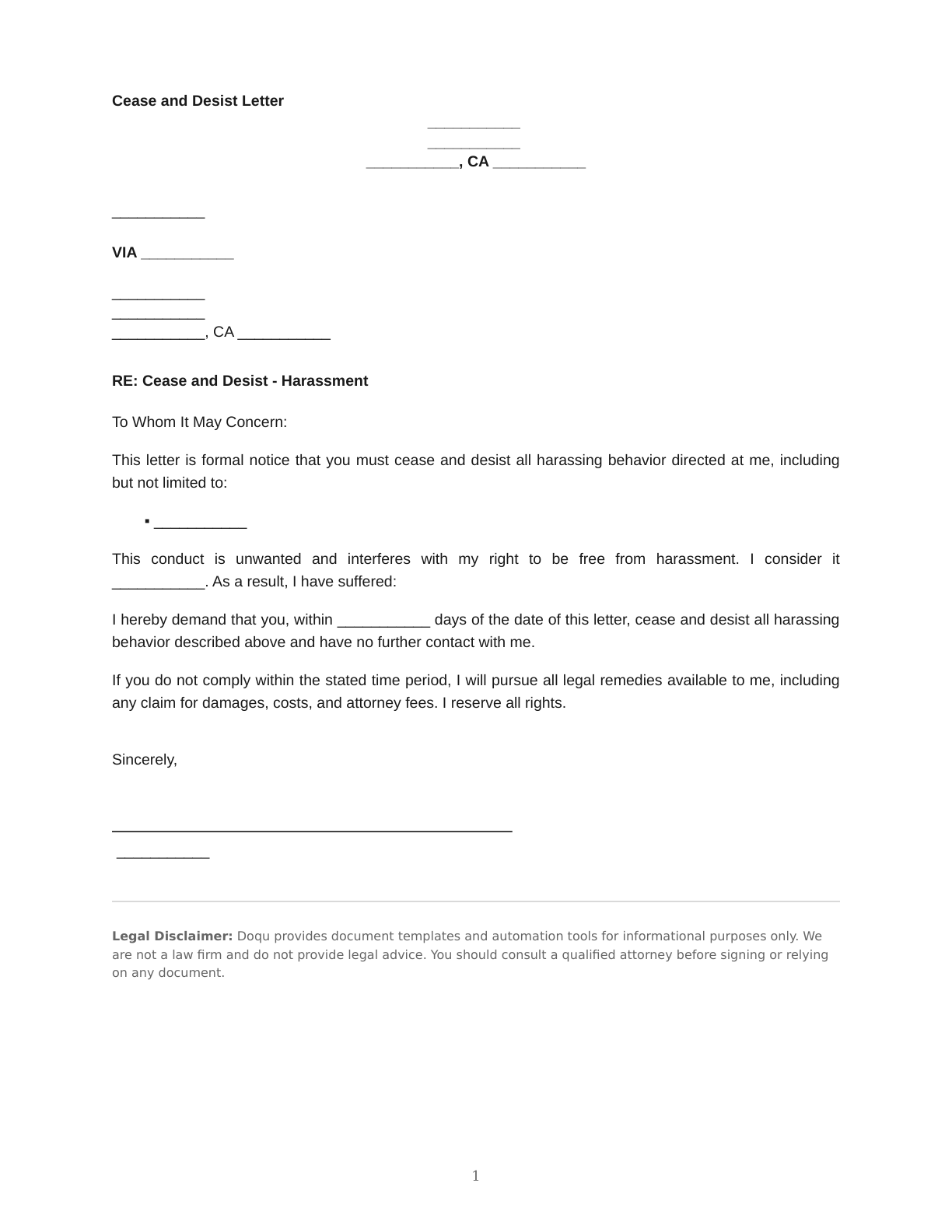
What is in the letter
- Your details and theirs, as an individual or on behalf of a company, with a return address or blank space for your letterhead
- Delivery method, including certified mail, overnight, email, or fax
- A subject line naming the type of dispute
- A description of the conduct you want stopped, in your own words
- The harm it has caused you
- Your demands, including removal, retraction, destruction of copies, or written confirmation, depending on the situation
- A deadline, either immediate or a set number of days
- A consequences paragraph reserving your legal remedies
- Your signature block, with a title and company name when you send it as a business
- An Exhibit A page for your evidence, if you choose to attach it
How it works on Doqu
- Pick the situation you are dealing with, and the questions adjust to match it.
- Answer in plain language. You do not need legal wording; describe what happened.
- Preview free so you can read the whole letter before you download.
- Download as PDF or Word, sign it, and send it by certified mail.
Free to start; download when you are ready. Keep the signed copy, the receipt, and any reply together in one place.
Related documents
Browse more in dispute and notice letters.
- Harassment Cease and Desist Letter
- Defamation Cease and Desist Letter
- Copyright Infringement Cease and Desist Letter
- Trademark Infringement Cease and Desist Letter
- Debt Collection Cease and Desist Letter
- Loan Agreement: put lending terms in writing before a disagreement starts
Frequently asked questions
Sample document preview
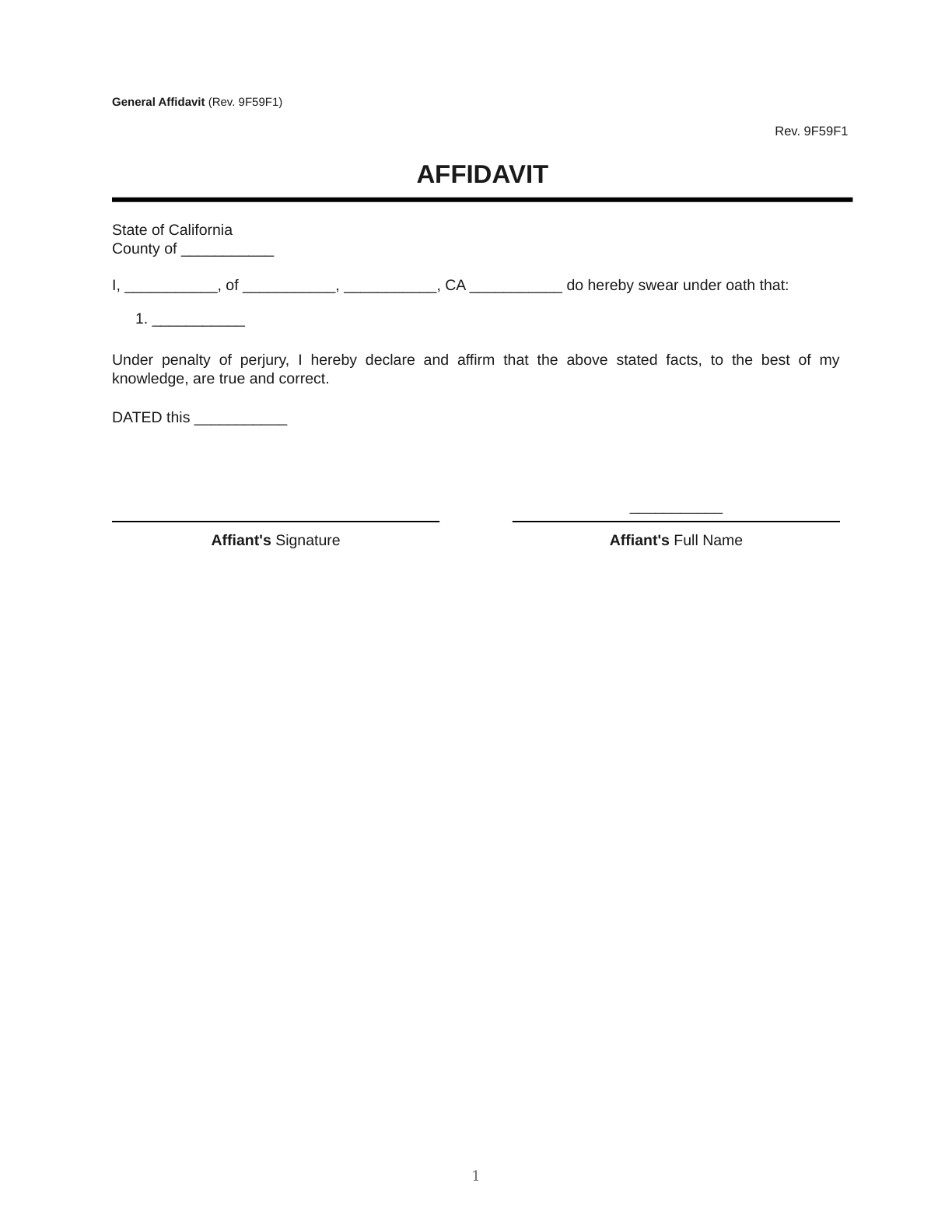
This page includes a sample Cease and Desist Letter with blank answer lines. Names, dates, addresses, and other details are intentionally left unfilled so you can see the letter's structure.
Downloadable sample PDF and Word files include only the first 2 pages, plus a final page with a link to create the full document on Doqu. They are not complete, usable legal documents.
To complete this document: use the Doqu editor to answer guided questions. Your live preview updates as you fill in each field, then you can download or send the document for e-signature.
Download the sample files below to review layout and clause structure before you start.
Cease and Desist Letter — other states
Browse cease and desist letter templates for other US states.
- Alabama
- Alaska
- Arizona
- Arkansas
- California
- Colorado
- Connecticut
- Delaware
- Florida
- Georgia
- Hawaii
- Idaho
- Illinois
- Indiana
- Iowa
- Kansas
- Kentucky
- Louisiana
- Maine
- Maryland
- Massachusetts
- Michigan
- Minnesota
- Mississippi
- Missouri
- Montana
- Nebraska
- Nevada
- New Hampshire
- New Jersey
- New Mexico
- New York
- North Carolina
- North Dakota
- Ohio
- Oklahoma
- Oregon
- Rhode Island
- South Carolina
- South Dakota
- Tennessee
- Texas
- Utah
- Vermont
- Virginia
- Washington
- West Virginia
- Wisconsin
- Wyoming