A lease agreement is the written contract that creates a lawful tenancy. It names the landlord and tenant, describes the property, sets rent and term, and records the rules both sides follow. A clear lease cuts down disputes about money, maintenance, and move-out.
This template works nationwide, but landlord–tenant law varies by state and city. Confirm local notice periods, deposit caps, and required disclosures before signing.
Parties, entities, and identification
The form supports individual or entity landlords and tenants, up to four signers per side, with notice addresses, email, phone, and optional government ID numbers recorded in a Parties table on the first page. Entity parties can name an authorized representative for e-sign. Optional ID fields (driver's license, state ID, passport, or EIN) print in full on the signed lease when provided.
A lease agreement (rental agreement) is a binding contract between a property owner and a tenant. It defines the premises being rented, the term of occupancy, rent and payment terms, and each party’s obligations during the tenancy.
Unlike a rental application, which screens applicants, the lease creates the tenancy. Once signed, either party can enforce its terms in court — subject to state and federal housing law.
A lease agreement records the deal you and your tenant made: who rents what, for how long, at what price, and under which rules. It does not replace state habitability laws, fair-housing rules, or mandatory local disclosures.
Fixed-term vs month-to-month
Most leases fall into one of two patterns:
| Type | How it works | Best when |
|---|---|---|
| Fixed term | Runs from a start date to an end date (often 6 or 12 months). Neither party can simply walk away early without following the agreement or local law. | You want predictable income and a defined move-out window. |
| Month-to-month | Renews automatically each month until either party gives proper notice to end it. | You need flexibility for short stays or uncertain plans. |
This template supports both options. Choose fixed term for start and end dates, or month-to-month for an open-ended term. The document includes a 30-day termination notice clause; some states require longer notice — verify local rules.
Key clauses to understand
Before you sign, read how the template handles the topics landlords and tenants ask about most often.
Rent
The lease states monthly rent, the due date, and payment methods. Late fees and grace periods follow state law unless you add them in optional provisions.
Security deposit
You can require a deposit or waive it. When one applies, the form records the amount and return timeline, minus lawful deductions. Many states cap deposits or require itemized statements — see state landlord–tenant law.
Utilities
By default, the tenant pays utilities and other services for the premises. If the landlord will cover water, trash, internet, or other bills, add that in the optional additional provisions section so there is no guesswork.
Pets and smoking
The form includes yes/no choices for pets and smoking. Add breed or pet-deposit details in additional provisions if needed. Service animals are protected under fair-housing law.
Maintenance
The tenant keeps the unit clean, reports repairs, and pays for damage beyond wear and tear. The landlord still must meet habitability duties under state law.
Termination and move-out
At lease end, the tenant returns possession in good condition, allowing for reasonable wear. Month-to-month leases end with written notice; fixed-term leases run to the end date unless both parties agree otherwise or local law allows early termination.
How it works on Doqu
Enter parties and property details
Add landlord and tenant names (up to five tenants), the property address, housing type, and optional bedroom and bathroom counts. Note any existing condition issues the tenant should acknowledge at move-in.
Set term, rent, and rules
Choose fixed term or month-to-month, enter start (and end) dates, monthly rent, due day, payment methods, security deposit settings, and pet and smoking policies. Add custom clauses if you need parking, guest limits, or landlord-paid utilities.
Preview, e-sign, and download
Review the live document preview, collect e-signatures from landlord and tenant, and download PDF or Word for your records.
Related documents
Use these forms before, during, or after the lease:
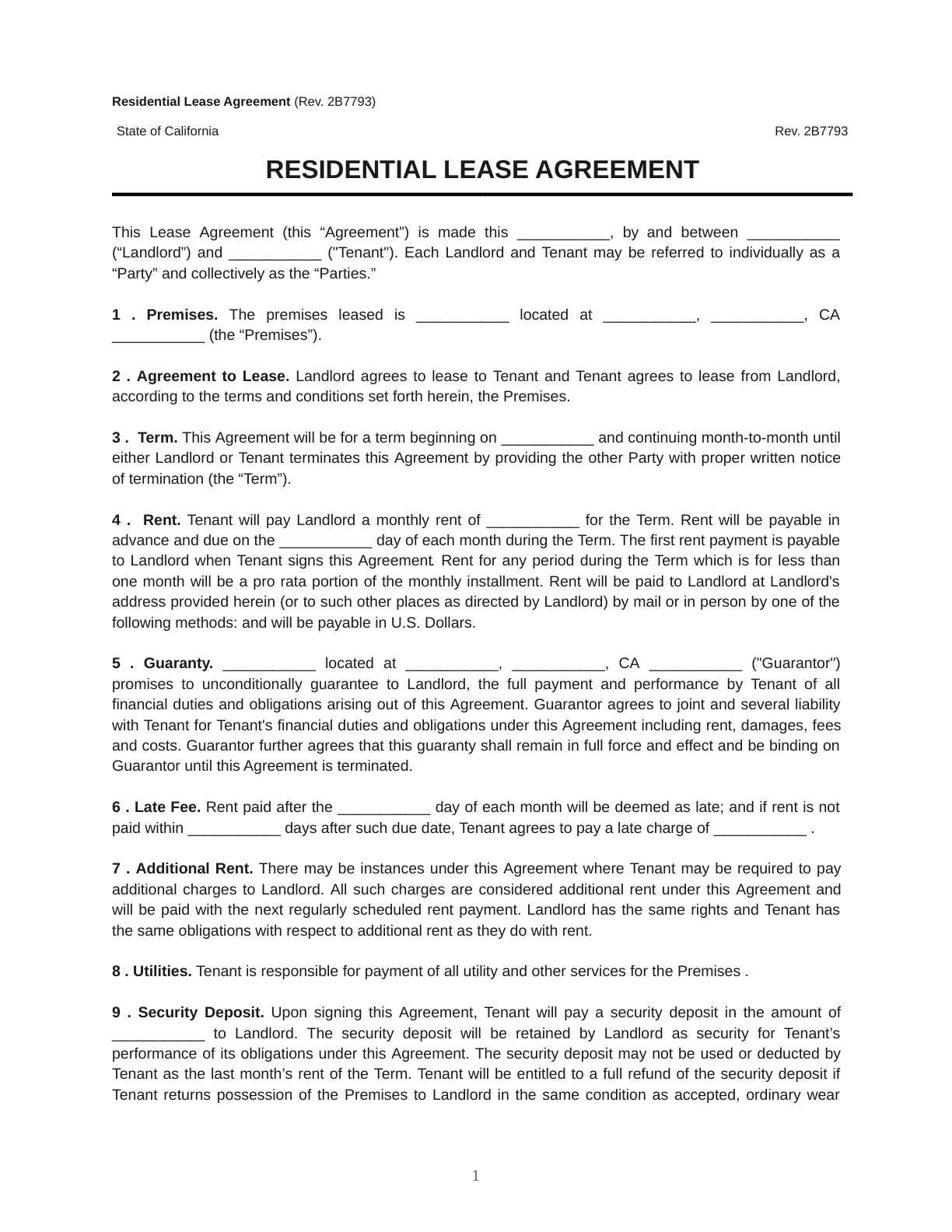
- Residential Lease Agreement — a longer residential lease with additional landlord–tenant sections
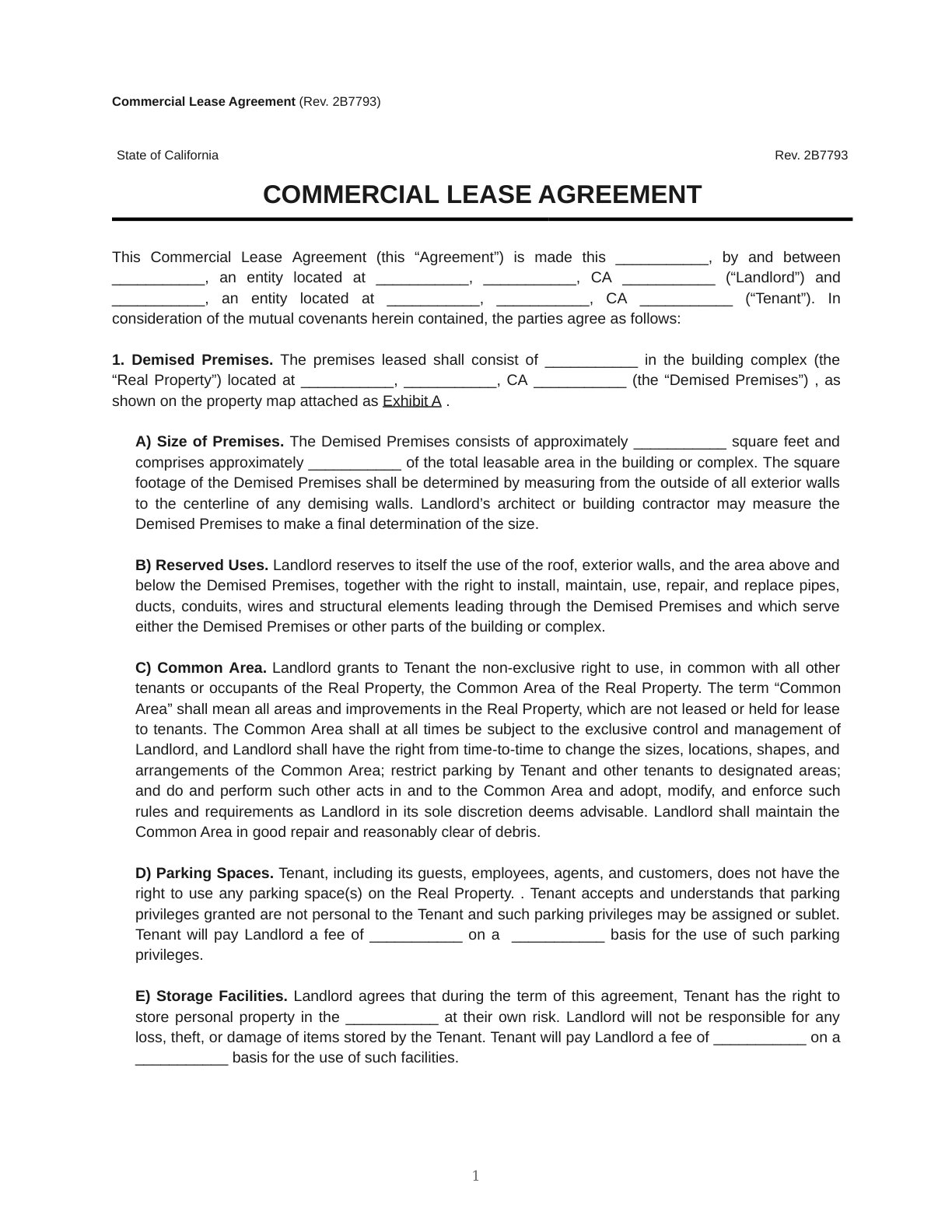
- Commercial Lease Agreement — for renting business or retail space
- Rental Application — screen applicants before offering a lease
- Eviction Notice — formal notice when a tenant breaches the lease or must vacate
- Rental Agreements category — browse more landlord and tenant templates
Federal fair housing rules prohibit discrimination in rental transactions.
Frequently asked questions
Sample document preview
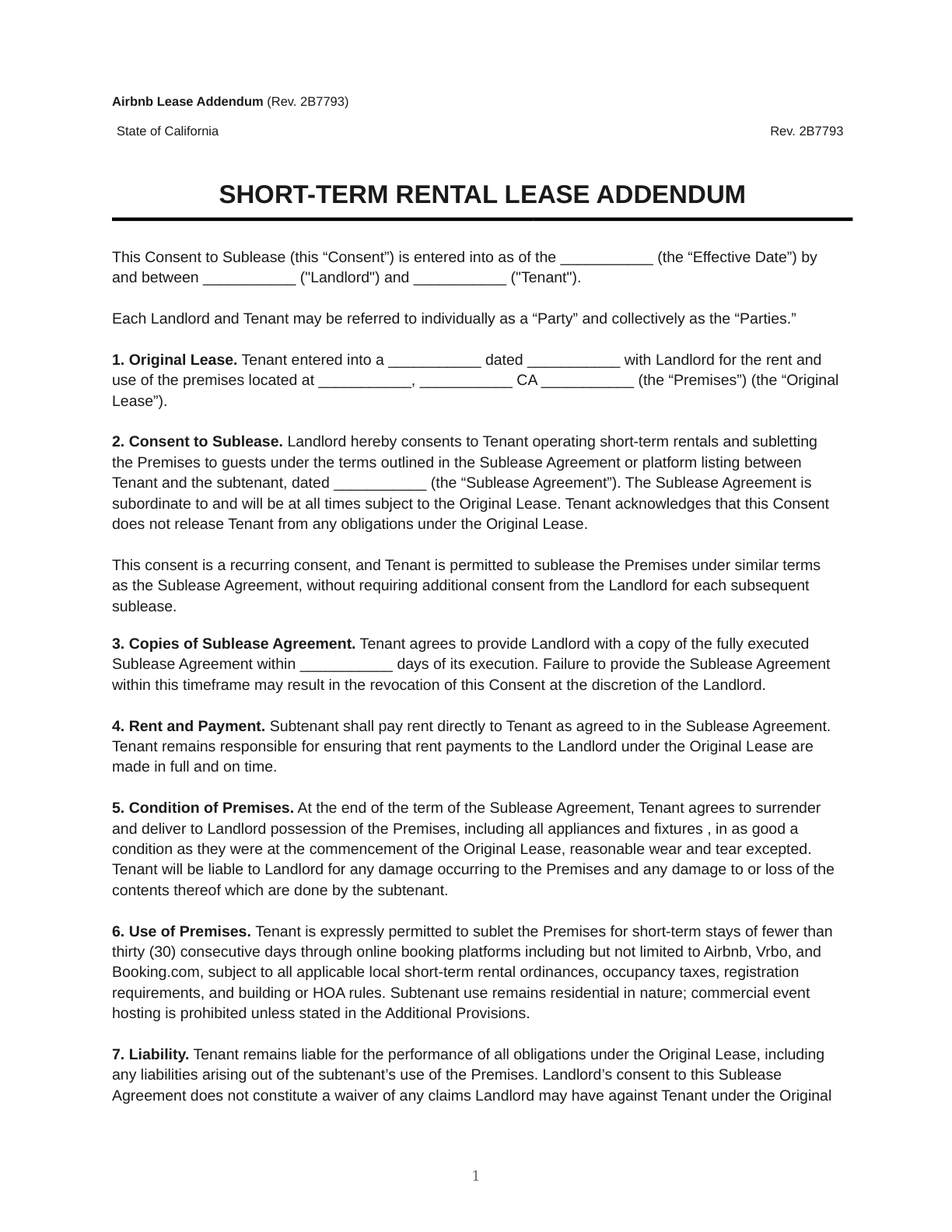
This page includes a sample Lease Agreement (California) with blank answer lines. Names, dates, dollar amounts, and other details are intentionally left unfilled so you can see the document structure.
Downloadable sample PDF and Word files include only the first 2 pages, plus a final page with a link to create the full document on Doqu. They are not complete, usable legal documents.
To complete this document: use the Doqu editor to answer guided questions. Your live preview updates as you fill in each field, then you can download or send the document for e-signature.
Download the sample files below to review layout and clause structure before you start.
Lease Agreement — other states
Browse lease agreement templates for other US states.
- Alabama
- Alaska
- Arizona
- Arkansas
- California
- Colorado
- Connecticut
- Delaware
- Florida
- Georgia
- Hawaii
- Idaho
- Illinois
- Indiana
- Iowa
- Kentucky
- Louisiana
- Maine
- Maryland
- Massachusetts
- Michigan
- Minnesota
- Mississippi
- Missouri
- Montana
- Nebraska
- Nevada
- New Hampshire
- New Jersey
- New Mexico
- New York
- North Carolina
- North Dakota
- Ohio
- Oklahoma
- Oregon
- Pennsylvania
- Rhode Island
- South Carolina
- South Dakota
- Tennessee
- Texas
- Utah
- Vermont
- Virginia
- Washington
- West Virginia
- Wisconsin
- Wyoming