Need someone you trust to handle banking, bills, or paperwork while you travel, recover, or plan ahead? Create a power of attorney form free to start: answer guided questions, preview the document, then download as PDF or Word when you are ready.
This form covers money and paperwork: banking, bills, property, taxes, and benefits. You decide whether your agent’s authority ends if you become incapacitated (ordinary) or keeps going (durable).
You can use it in any state. Before you sign, check whether your state asks for a notary, witnesses, or both. If your state publishes its own official power of attorney form, compare the two and use whichever your bank will accept.
What is a power of attorney?
A power of attorney (POA) is a legal document that lets you (the principal) appoint another person (your agent, sometimes called an attorney-in-fact) to act for you on financial and legal matters. Your agent can only do what the document authorizes: pay bills, manage accounts, deal with property, handle taxes or benefits, or complete other tasks you grant.
A financial or general POA is not a medical directive. It does not authorize health care decisions, treatment consent, or end-of-life choices. For those, you need a separate medical power of attorney or advance health care directive under your state's health-care laws.
The Consumer Financial Protection Bureau explains that once an agent accepts appointment, they act as a fiduciary: they must manage your money and property for your benefit, keep records, and avoid mixing your assets with their own.
A power of attorney form works when you name a trustworthy agent, define ordinary or durable authority clearly, grant only the powers you intend, and execute the document the way your state expects.
Types of power of attorney
People searching for a free power of attorney form, POA template, or general power of attorney often mean different documents. Use this map before you start.
Ordinary (non-durable) power of attorney
An ordinary (non-durable) power of attorney is valid while you can manage your own affairs. It typically ends if you become incapacitated, and it also ends when you die or revoke it. This form defaults to ordinary authority because many people need short-term help: travel, a closing, or temporary bill-paying.
Durable power of attorney
A durable power of attorney is written so the agent's authority continues after you become incapacitated. That is the usual choice for long-term estate and incapacity planning. Select durable on this form when that is your goal. Durable powers still end at death (or earlier revocation while you have capacity).
Ordinary vs durable
| Question | Ordinary (non-durable) | Durable |
|---|---|---|
| Main use | Short-term help while you have capacity | Planning for illness or cognitive decline |
| If you become incapacitated | Authority generally ends | Authority continues |
| Ends at your death? | Yes | Yes |
| Best when | Travel, temporary delegation, one project | Avoiding court conservatorship for finances |
Some states that adopted the Uniform Power of Attorney Act treat a POA as durable unless the document says otherwise. Virginia's adoption, for example, states that a power of attorney created under that chapter is durable unless it expressly terminates on incapacity. This form still asks you to choose ordinary or durable so your intent is explicit.
General, limited, and medical
- General: broad authority across the financial and legal categories you grant.
- Limited (special): authority for a narrow task or window, such as one closing or specific accounts.
- Medical: names someone for treatment decisions (a healthcare proxy). Separate from this financial/legal form.
Shape scope here with asset, benefits, and hot-power choices plus special instructions.
When you need a power of attorney
Create a POA form when you want a trusted person to act without a court order:
- You will travel or be unreachable and still need bills paid, documents signed, or accounts managed
- You want short-term delegation for a sale, refinance, or business task (ordinary often fits)
- You are planning for illness or aging and want continuity if you lose capacity (choose durable)
- You prefer a private agent over waiting for a court-appointed guardian or conservator of the estate
- You need someone to deal with banks, insurers, tax agencies, or benefit programs for you
A POA is usually not the right tool to transfer property after death (use a will or trust), to authorize medical treatment (use a medical directive), or to force a bank to accept an improperly executed form. Institutions can still ask for originals, notarization, or their own affidavits.
What's included in this power of attorney template
Your guided form walks through the decisions a complete general POA should cover:
- Power of Attorney Type: ordinary (default) or durable
- Principal: your legal name and address (including state)
- Agent: the person you appoint, with contact details
- Successor Agent and optional co-agent structure if your primary agent cannot serve
- Powers: property and accounts; insurance, benefits, and taxes; and specific "hot" powers that often need express authorization
- Special instructions: limits, conditions, or extra authority in plain language
- Effectiveness: when the POA starts, and how it interacts with prior powers of attorney
- Nomination of Guardian: optional preferences if a court later appoints a guardian
- Final details: notary acknowledgment, witnesses, signatures, and document review
Those sections map to the real choices you make in the builder, not a generic encyclopedia list.
How to set up your power of attorney
Choose ordinary or durable, then name your agent
Pick ordinary for short-term help while you remain able to act. Pick durable if you want authority to survive incapacity. Name a primary agent you trust with money and paperwork, plus a successor for backup. Confirm each person is willing to serve and keep records before you finalize the form.
Decide which powers to grant
Work through property and accounts, benefits and tax authority, and any hot powers that need clear wording. Grant only what your agent needs. For a limited POA, withhold unrelated categories and spell limits in special instructions. For a general power of attorney, cover the categories your agent will actually use.
Set when the POA takes effect
Choose immediate effect, a future date, or a stated event. Immediate effect is simpler for banks and agents. Event-based ("springing") authority can delay acceptance because third parties may demand proof. Also decide what happens to earlier powers of attorney so institutions are not looking at conflicting documents.
Execute with the formalities your state expects
Sign while you still have capacity and understand what you are granting. Many states expect notarization, witnesses, or both, and anything involving real estate usually needs to be notarized so it can be recorded. If your state requires its own official form, use that one. After signing, give your agent a copy and keep the original somewhere safe.
Plan for revocation and review
You can usually revoke a POA in writing while you have capacity. Deliver notice to your agent and anyone who has a copy on file. Review after major life changes: marriage, divorce, a move, new property, or the death or unavailability of an agent.
State rules to check before you sign
Power of attorney rules are set by your state. Many states borrow from the Uniform Power of Attorney Act, but the details differ: whether a POA is durable by default, what signing formalities apply, which powers need extra wording, and how readily banks accept an outside form.
You enter your state in the principal and agent details and the document adjusts. Two things worth confirming yourself: your state's signing requirements, and whether the bank or title company you are dealing with has its own POA paperwork.
A few states publish their own official statutory form. California is one of them. If your bank or title company insists on that exact form, use the state version rather than this one.
For what your agent may and may not do with your money, the CFPB's Managing Someone Else's Money guides are a plain-language starting point.
How it works on Doqu
- Answer simple questions about type (ordinary or durable), parties, powers, effectiveness, and signing details.
- Preview free so you can read the full power of attorney template before you download.
- Download as PDF or Word when you are ready to print, notarize, or share with your agent.
- Use e-sign where appropriate, then complete any in-person notary or witness steps your state still requires.
Free to start; download when you are ready. Keep a signed copy with your agent and another with your estate planning papers.
Related estate planning documents
Explore more in the Estate Planning category.
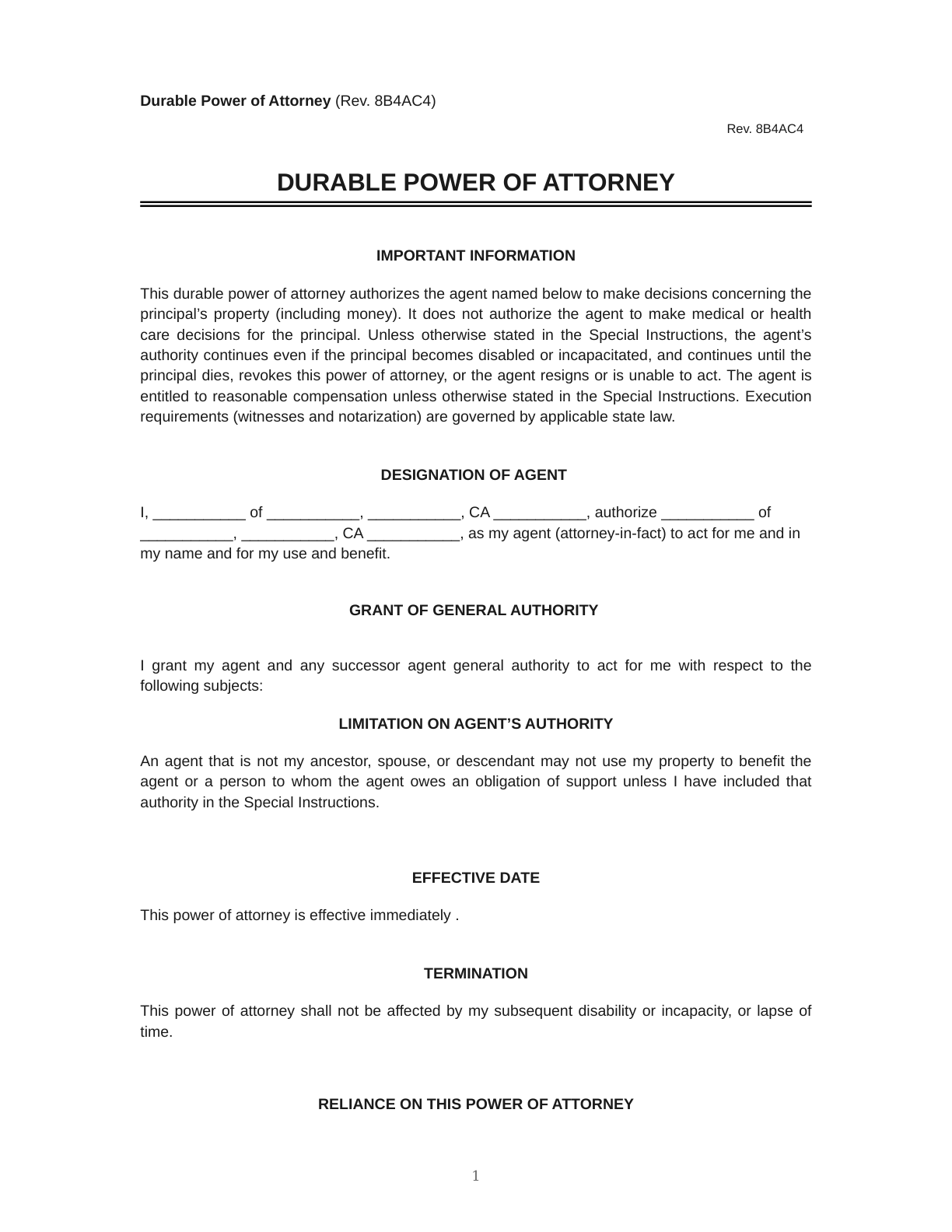
- Durable Power of Attorney: financial POA that stays valid if you become incapacitated
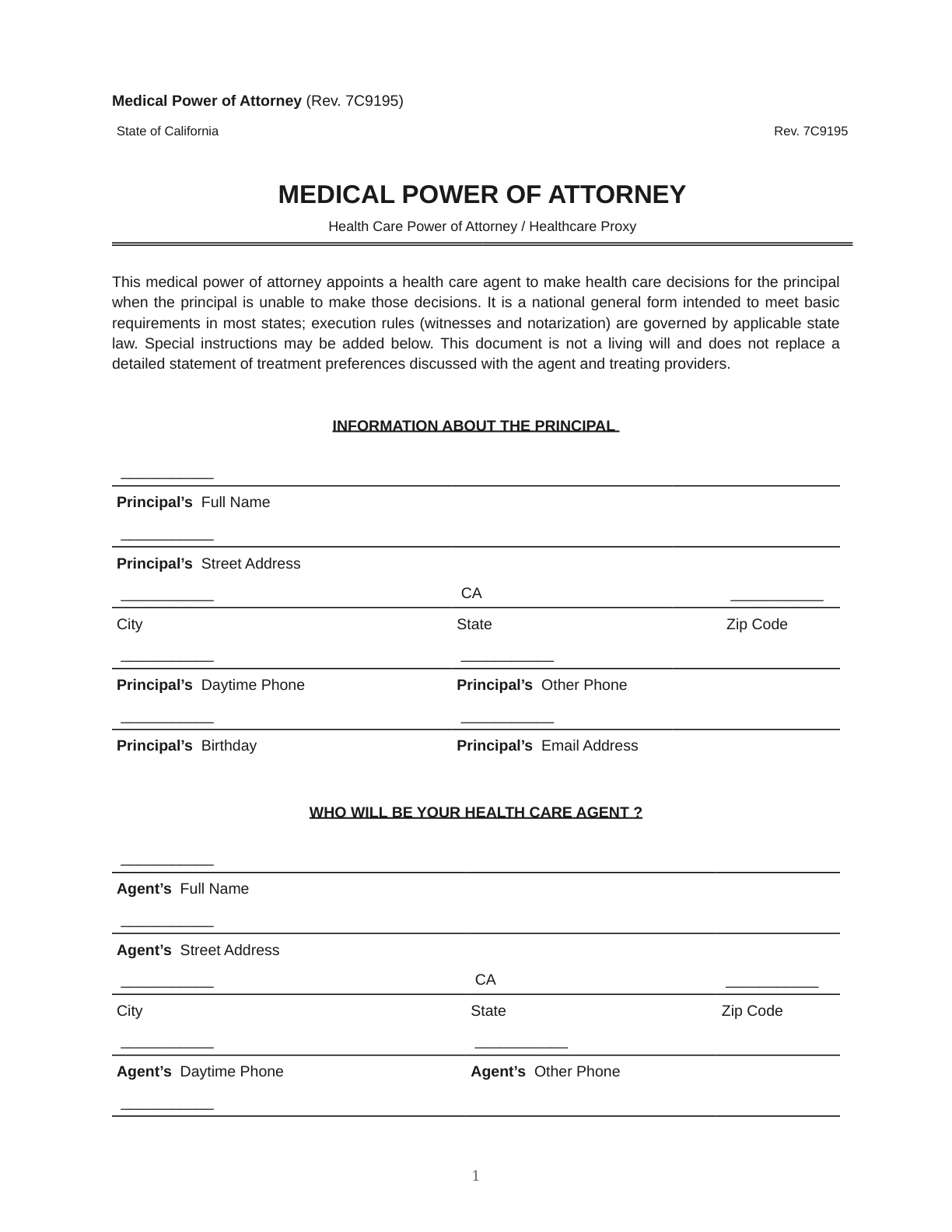
- Medical Power of Attorney: healthcare proxy / medical decision-maker form
A complete plan often pairs a financial POA with a medical directive and a will or trust. This page focuses on the financial and legal appointment.
Frequently asked questions
Sample document preview
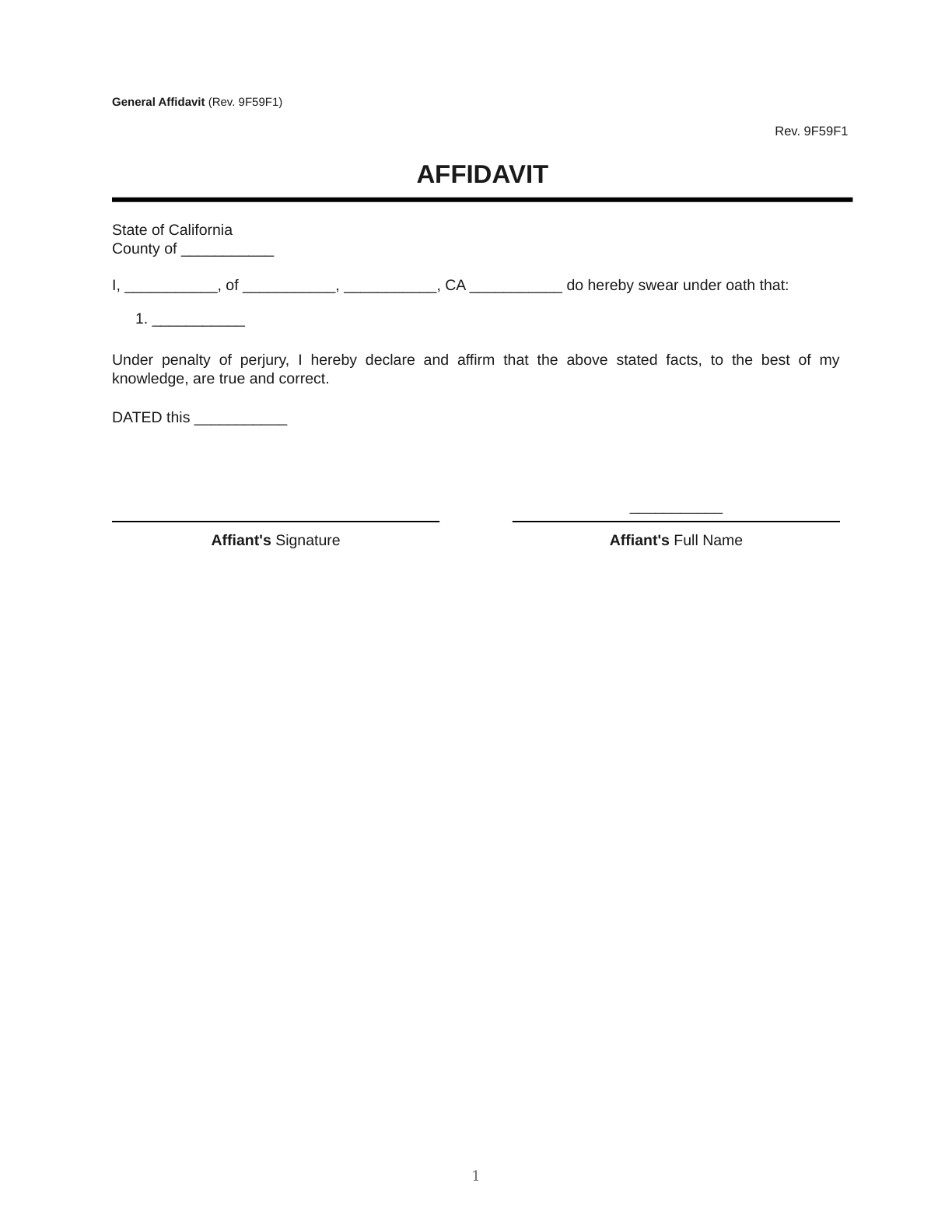
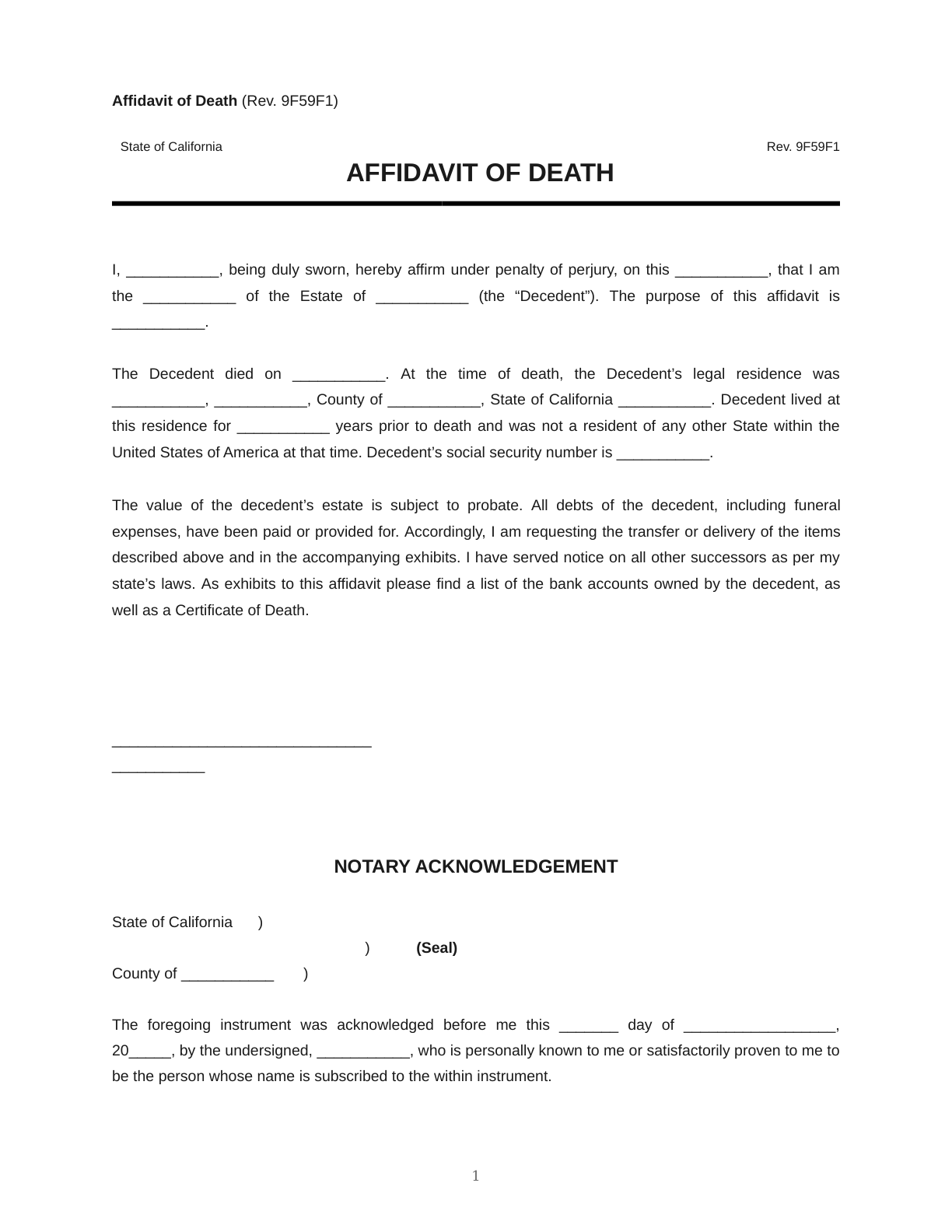
This page includes a sample Power of Attorney (California) with blank answer lines. Names, dates, dollar amounts, and other details are intentionally left unfilled so you can see the document structure.
Downloadable sample PDF and Word files include only the first 2 pages, plus a final page with a link to create the full document on Doqu. They are not complete, usable legal documents.
To complete this document: use the Doqu editor to answer guided questions. Your live preview updates as you fill in each field, then you can download or send the document for e-signature.
Download the sample files below to review layout and clause structure before you start.
Power of Attorney — other states
Browse power of attorney templates for other US states.
- Alaska
- Arizona
- Arkansas
- California
- Colorado
- Connecticut
- Delaware
- Florida
- Georgia
- Hawaii
- Idaho
- Illinois
- Indiana
- Iowa
- Kansas
- Kentucky
- Louisiana
- Maine
- Maryland
- Massachusetts
- Michigan
- Minnesota
- Mississippi
- Missouri
- Montana
- Nebraska
- Nevada
- New Hampshire
- New Jersey
- New Mexico
- New York
- North Carolina
- North Dakota
- Ohio
- Oklahoma
- Oregon
- Pennsylvania
- Rhode Island
- South Carolina
- South Dakota
- Tennessee
- Texas
- Utah
- Vermont
- Virginia
- Washington
- West Virginia
- Wisconsin
- Wyoming