Selling or buying personal property like a vehicle, vessel, equipment, or electronics? Using a bill of sale template protects both parties by recording the transfer of ownership, payment terms, and item condition. Create your customized bill of sale form free to start: answer guided questions, preview your completed document, and download as a printable PDF or editable Word file.
A properly executed bill of sale acts as a legal sales receipt and legal proof of purchase. Whether you need a car bill of sale, a boat bill of sale, or a general personal property receipt, this notary-ready template adapts to your transaction and state requirements.
What Is a Bill of Sale?
A bill of sale is a legal document that transfers ownership of personal property from a seller to a buyer in exchange for a specified purchase price or trade value. It serves as evidence that a valid sale took place, documenting the date of transfer, financial terms, and the exact condition of the item being sold.
Under Article 2 of the Uniform Commercial Code (UCC § 2-201), written contracts or bills of sale provide essential evidence of ownership transfers for goods valued at 500 US dollars or more. For motor vehicles, trailers, and watercraft, state licensing agencies and departments of motor vehicles (DMV) often require a signed bill of sale to process title transfers and calculate applicable sales tax.
A bill of sale establishes a clear legal record of property transfer, protects the seller against post-sale liability, and gives the buyer proof of ownership needed for titling, registration, and tax filing.
Types of Bills of Sale (Vehicle, Boat, Firearm, General Property)
Different items require specific legal disclosures to satisfy state law and administrative requirements. Choosing the correct bill of sale form ensures you collect all mandatory identification details before completing the sale.
- Motor Vehicle Bill of Sale: Used for cars, trucks, motorcycles, vans, and recreational vehicles (RVs). Includes vehicle identification number (VIN), year, make, model, body type, and state-mandated odometer disclosure readings.
- Boat and Vessel Bill of Sale: Designed for motorized boats, sailboats, personal watercraft (such as Jet Skis), and boat trailers. Requires the Hull Identification Number (HIN), outboard motor serial numbers, vessel length, and registration numbers.
- Firearm Bill of Sale: Used for private transfers of long guns or handguns. Records serial numbers, caliber, firearm make, model, and buyer certifications acknowledging legal eligibility under federal and state firearms laws.
- General Personal Property Bill of Sale: Covers tools, heavy machinery, agricultural equipment, appliances, electronics, furniture, livestock, and other tangible personal assets. Relies on serial numbers, brand names, and detailed physical descriptions.
When Do You Need a Bill of Sale?
You should create and sign a bill of sale whenever personal property of significant value changes hands between private individuals or businesses. Common situations include:
- Private Vehicle Sales: Transferring a used vehicle between private sellers and buyers outside a dealership.
- DMV Registration and Titling: Providing required documentation to state motor vehicle agencies to issue a new certificate of title and registration plates.
- Tax Assessment and Reporting: Establishing the actual purchase price for state and local sales tax calculations.
- Seller Liability Protection: Documenting the exact date and time the buyer took possession, freeing the seller from liability for subsequent accidents, traffic violations, or abandoned vehicle towing fees.
- High-Value Equipment and Asset Sales: Keeping clear financial and inventory records for business assets, livestock, electronics, or personal equipment transfers.
Does a Bill of Sale Need to Be Notarized?
In many states, a standard bill of sale for general personal property is legally binding as soon as both the buyer and seller sign it. However, several state DMV offices and licensing authorities require a notarized signature on vehicle and vessel transfers under specific conditions:
- Mandatory State Rules: States such as Maryland, Nebraska, Louisiana, New Hampshire, and West Virginia require notarization on vehicle bills of sale when the vehicle is sold below fair market value, transferred without a title, or when required by county title offices.
- Identity Verification: A notary public verifies the identity of both parties, helping prevent title fraud and forged signatures on high-value transfers.
- Dispute Prevention: An official notary stamp and signature block make the document significantly easier to enforce in court if a party later disputes the agreement or claims signature forgery.
Our bill of sale template includes an optional notary acknowledgment block that you can enable or disable depending on your state guidelines and comfort level.
Bill of Sale vs. Title Transfer: Key Differences
It is common to confuse a bill of sale with a vehicle certificate of title, but they perform distinct legal functions in a transaction.
| Feature | Bill of Sale | Certificate of Title |
|---|---|---|
| Primary Purpose | Sales receipt & transaction contract | Government-issued proof of legal ownership |
| Issued By | Created & signed by buyer & seller | Issued by state government (DMV/DOT) |
| Contains | Price, payment method, as-is terms, signatures | Owner name, lienholder data, official state seal |
| Tax Calculation | Shows price paid for sales tax auditing | Used by state to assign official ownership |
| Required for Sale | Recommended for all private sales | Mandatory for titled vehicles & vessels |
A bill of sale documents the agreement and payment details, while the certificate of title transfers legal ownership registered with the state. In most vehicle sales, you need both documents to complete the transfer cleanly.
How to Write a Legal Bill of Sale (Step-by-Step)
Creating a thorough bill of sale takes only a few minutes when you follow a structured approach.
Identify the seller and buyer
Include the full legal names, physical street addresses, city, state, zip code, phone number, and optional email address for both seller and buyer. If either party is a corporation or LLC, list the legal entity name alongside the authorized representative's title.
Provide detailed item identification
Describe the property in unambiguous detail. For motor vehicles or watercraft, check the box indicating a vehicle/vessel transfer to unlock fields for Year, Make, Model, VIN/HIN, and current Odometer reading or engine hours. For general property, include brand names, serial numbers, color, model numbers, and any unique distinguishing marks.
Define the purchase price and payment terms
Specify the agreed total purchase price in United States dollars. Indicate whether sales tax is included in the stated figure, and select the payment method used (such as cash, cashier's check, personal check, money order, wire transfer, or electronic payment).
Set condition disclosures and warranty terms
State whether the property is sold "AS IS" without warranties, or if the seller is providing specific express warranties. Buying an item "as is" means the buyer accepts the property in its current state with all faults, and the seller has no ongoing obligation for future repairs.
Sign, date, and complete notarization
Record the official date of sale. Both the seller and buyer should sign and print their names on duplicate copies. If required by your state DMV or desired for extra security, sign the document in the presence of a notary public.
State DMV Requirements & Compliance Notes
Because vehicle licensing and sales tax rules vary across jurisdictions, keep these regional compliance notes in mind when drafting your document:
- Sales Tax Discrepancies: State departments of revenue often compare the purchase price listed on your bill of sale against fair market value tables (such as Kelley Blue Book). If a vehicle is sold far below market value, tax authorities may request written explanation or sworn affidavits.
- Gifts and Low-Value Transfers: If an item is transferred as a gift or nominal sale between family members, state agencies often require a specialized Affidavit of Gift alongside the bill of sale for tax exemption.
- Duplicate Copies: Always print at least two original signed copies of the bill of sale so both buyer and seller retain an executed legal copy for their tax and property records.
For related legal documents, explore our complete selection of business templates and specialized sales agreements.
Related documents
Frequently asked questions
Sample document preview
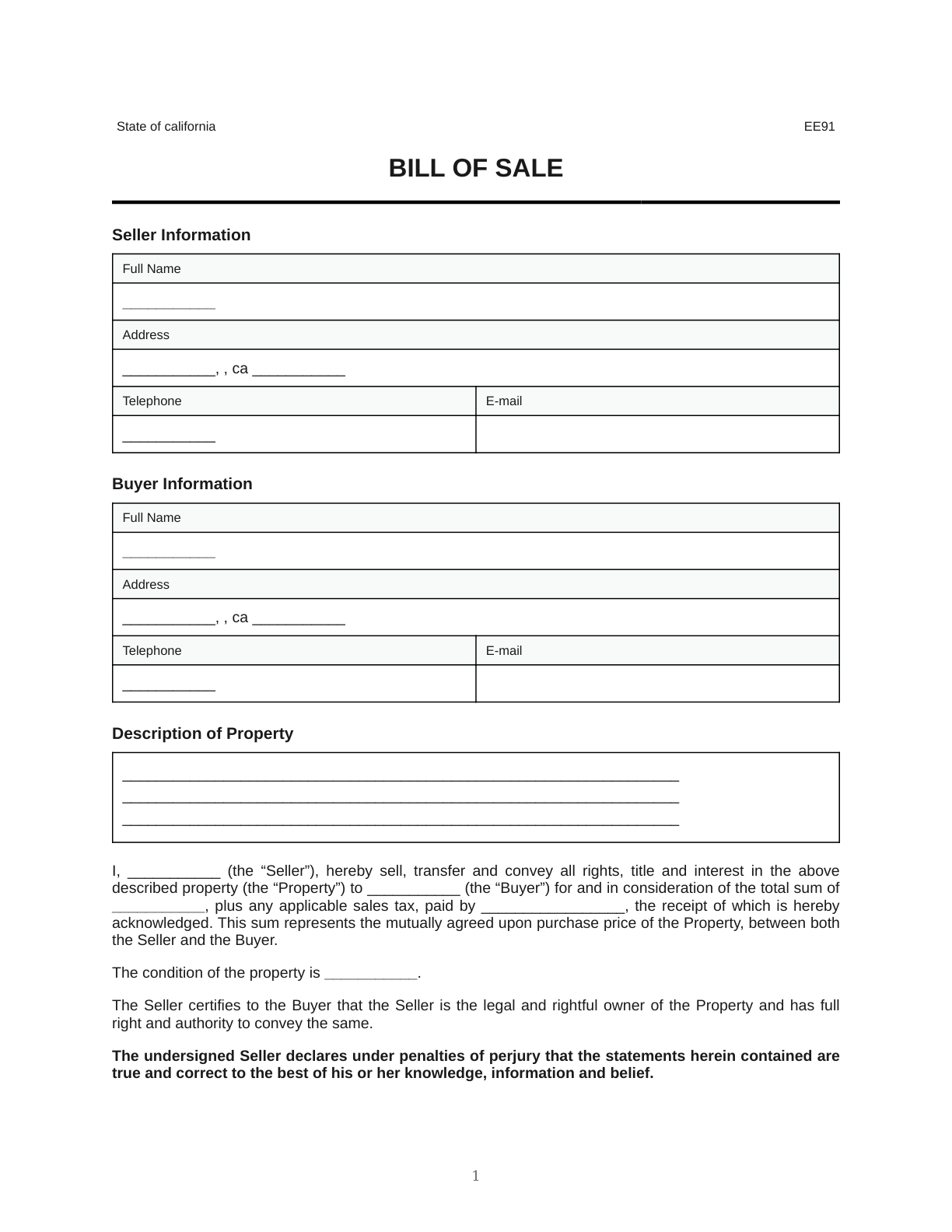
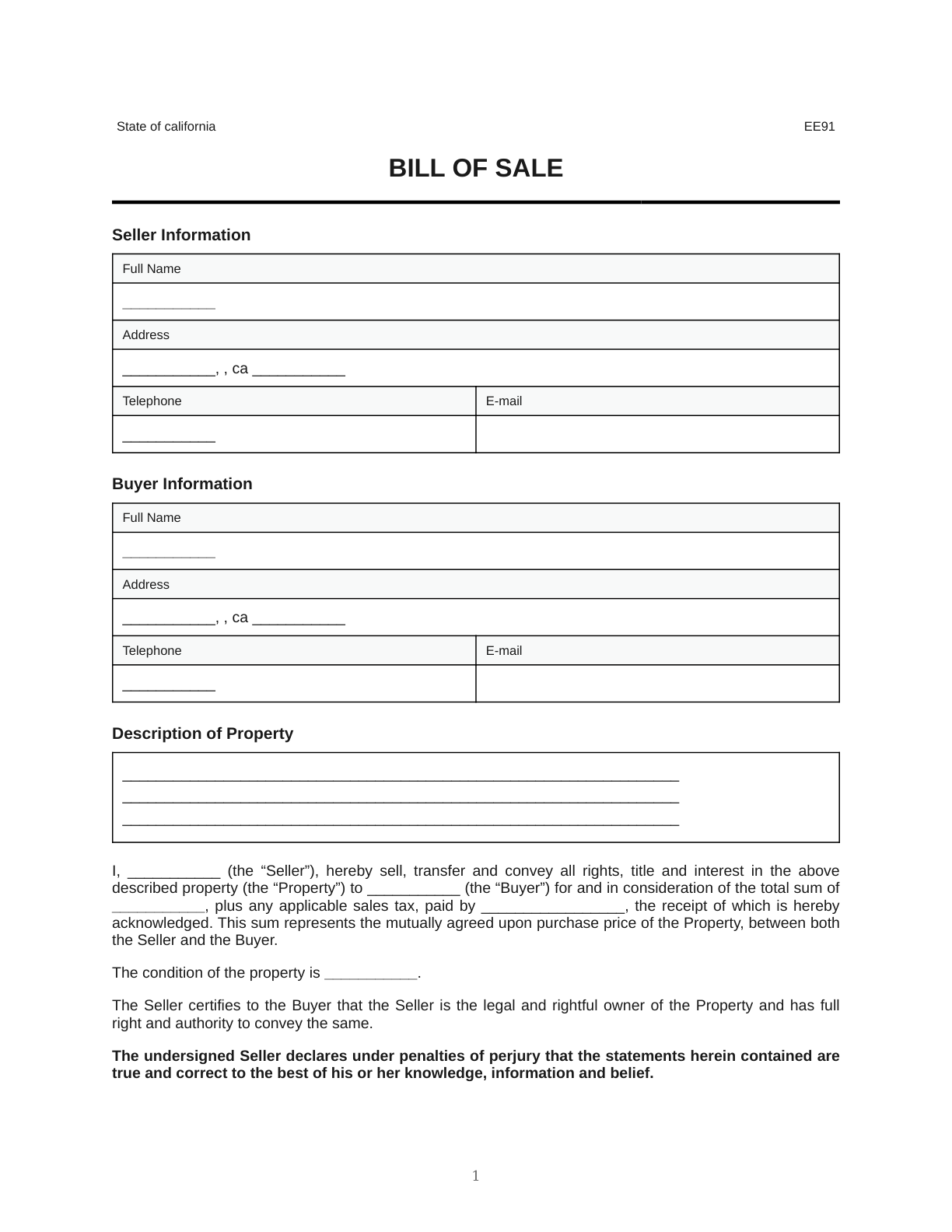
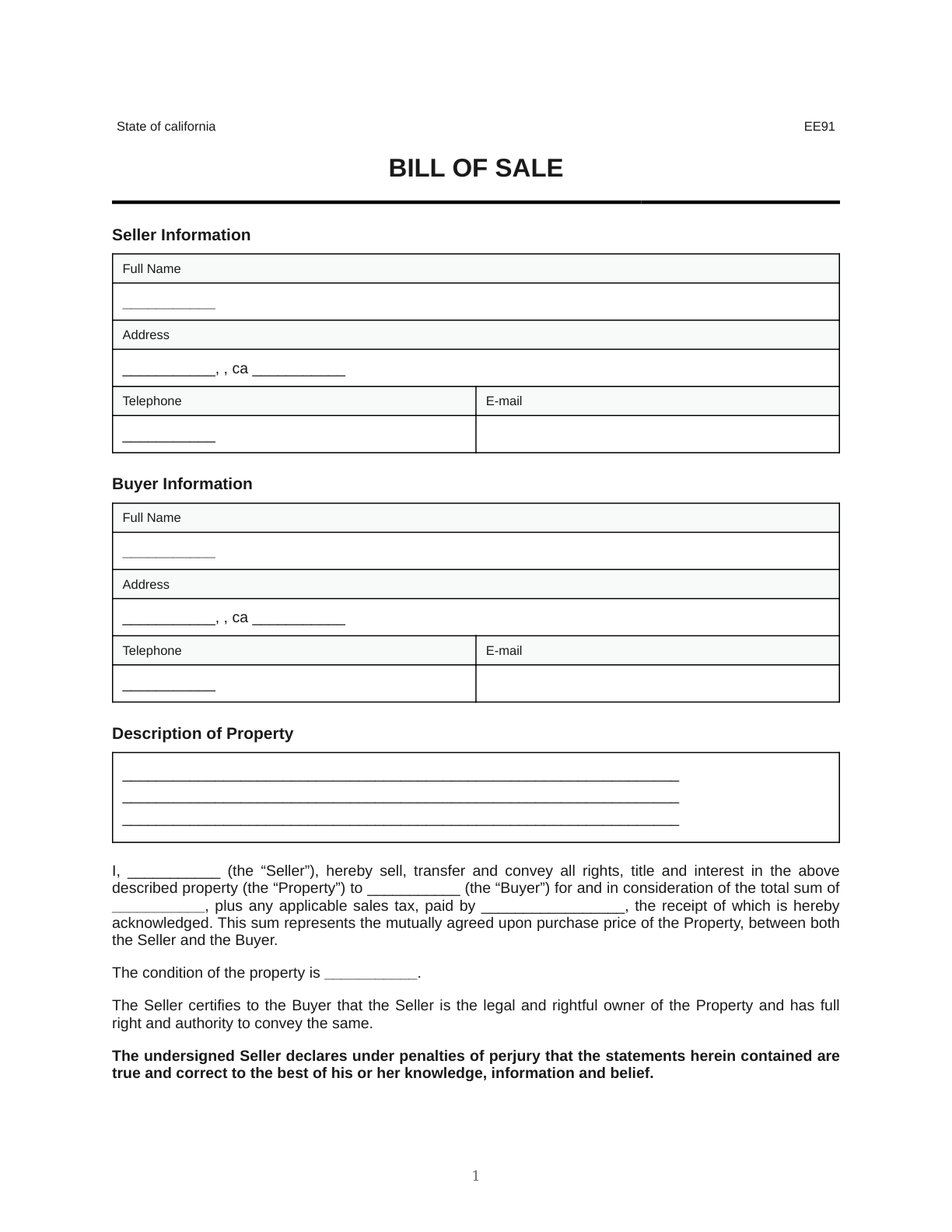
This page includes a sample Bill of Sale (California) with blank answer lines. Names, dates, dollar amounts, and other details are intentionally left unfilled so you can see the document structure.
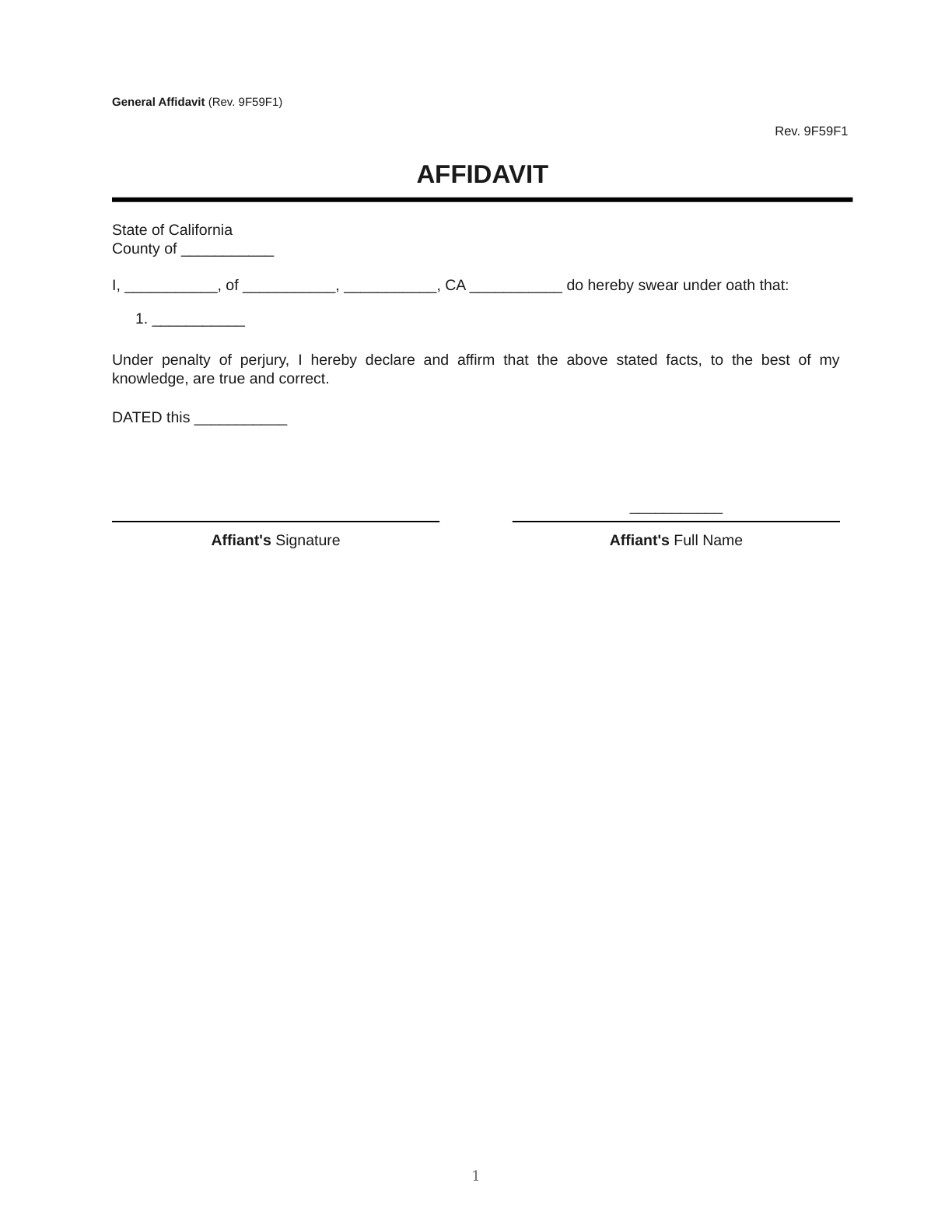
Downloadable sample PDF and Word files include only the first 2 pages, plus a final page with a link to create the full document on Doqu. They are not complete, usable legal documents.
To complete this document: use the Doqu editor to answer guided questions. Your live preview updates as you fill in each field, then you can download or send the document for e-signature.
Download the sample files below to review layout and clause structure before you start.
Bill of Sale — other states
Browse bill of sale templates for other US states.
- Alabama
- Alaska
- Arizona
- Arkansas
- California
- Colorado
- Connecticut
- Delaware
- Florida
- Georgia
- Hawaii
- Idaho
- Illinois
- Indiana
- Iowa
- Kansas
- Kentucky
- Louisiana
- Maine
- Maryland
- Massachusetts
- Michigan
- Minnesota
- Missouri
- Montana
- Nebraska
- Nevada
- New Hampshire
- New Jersey
- New Mexico
- New York
- North Carolina
- North Dakota
- Ohio
- Oklahoma
- Oregon
- Pennsylvania
- Rhode Island
- South Carolina
- South Dakota
- Tennessee
- Texas
- Utah
- Vermont
- Virginia
- Washington
- West Virginia
- Wisconsin
- Wyoming